Esfahan Bridges,
|
Iran
Esfahan BridgesVisited: April 2001, May 2001 More pictures of Esfahan Bridges:These pictures have been tagged with the following tags (clicking on the tag will take you to all pictures on this site with that tag) arches Asia bridge Esfahan Esfahan Bridges Iran stone bridge yellow asian womanSearchSearch pages at Traveladventures.org Go directly to:Travel picturesYou can travel the world using images - select your preferred language below: MailinglistIf you want to be updated regularly about new stories and pictures: Google EarthClick your way around Iran with pictures (needs Google Earth software) Visual GeographyAdvertiseIt is possible to advertise on this travel site. Travel advertisers, ask for more information! SurveyIs there a difference between a traveler and a tourist? View Results |


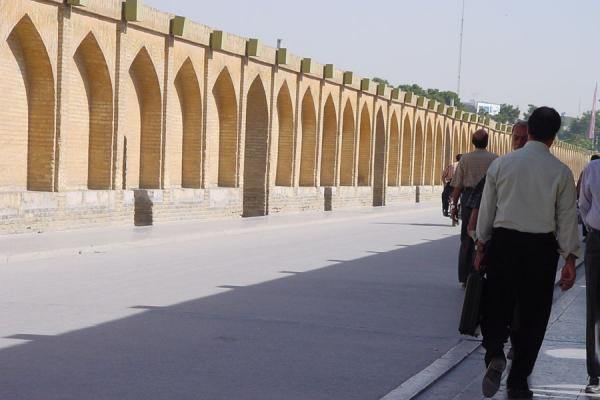
One of the highlights of a trip to Esfahan are its many bridges. Some of them are modern times structures, but others are historical structures. Even though the Zayande river they span may often be dry, walking down the old, typical bridges is a true delight, also because they are free of traffic. Only motorcycles seem to be allowed to ride across. This means they are used by many of the Esfahanians.
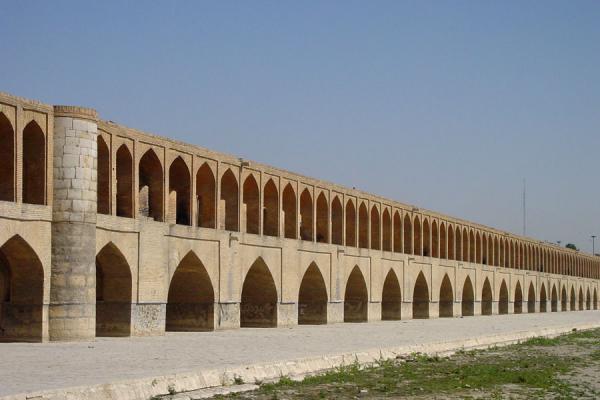
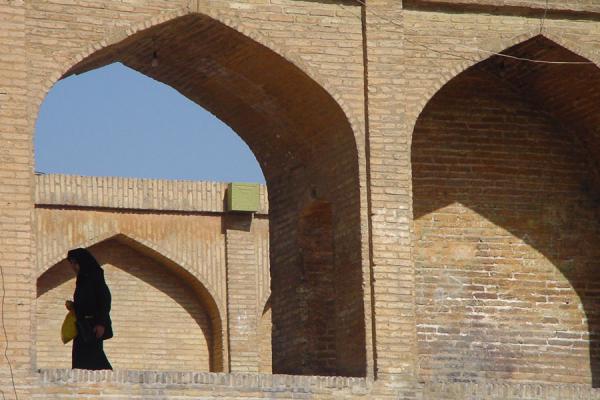
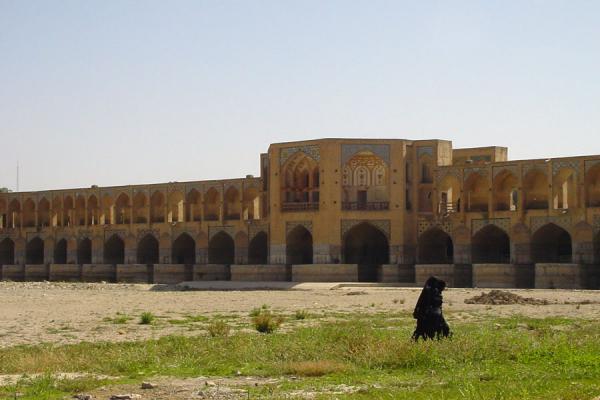
The Si o Se bridge, built in 1602, is perhaps the least interesting bridge but anyway merits a visit. Even though it is perfectly possibile most of the year to cross the river in the dry river bed, most people still use this bridge. Literally bridge of 33 arches, the arches are actually the first thing you notice. When looking at the bridge from below, you actually see two layers of arches - the top layer certainly has many more than 33 arches.
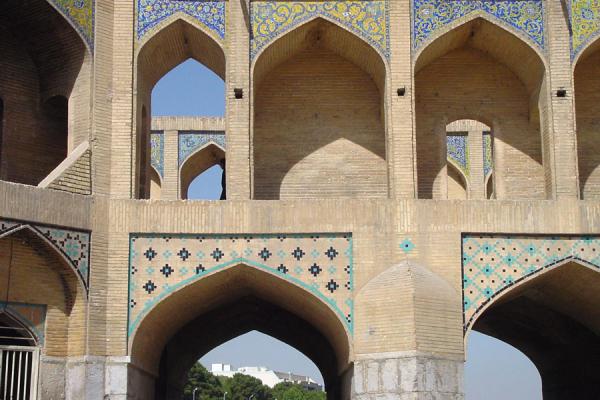
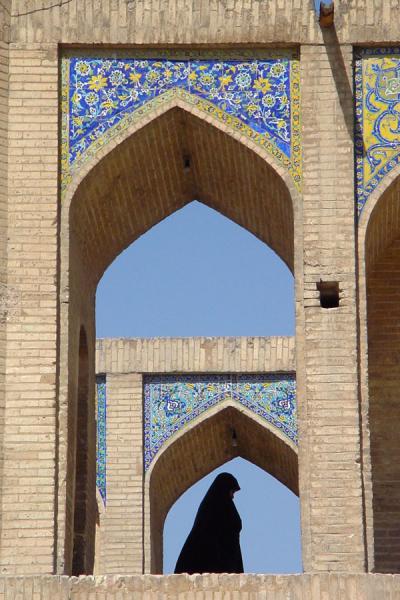
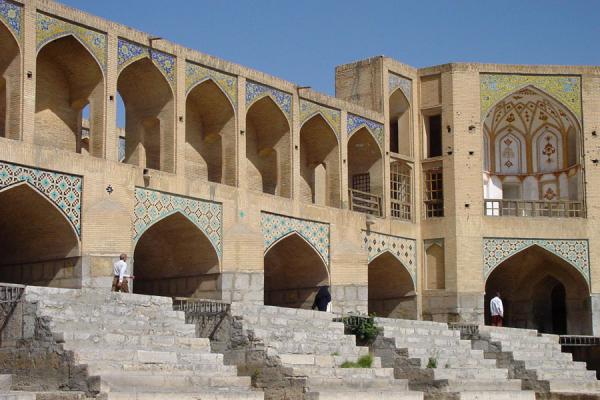
The Khaju Bridge has a much more beautiful finishing than its far neighbour. Built by the famous Shah Abbas I, it boasts tilework to decorate all of its arches on both the lower and top level. Apart from just being a special bridge, it also functions as a dam and you can actually see the locks when you walk across the lower level. In the middle of the bridge a pavilion can be found which was for the mere pleasure of the Shah. Like the Si o Se bridge, there are several teahouses underneath this bridge.


